Blog Archive

Sunday, 23 April 2017

Apr 16 – Galapagos Day 2

Apr 16 – Galapagos Day 2

7am start this time…………….no lazy lie ins on this holiday !! We’ll need a holiday afterwards….

The ship had moved on about 4am and then anchored again at 7am, so our first visit today is to Sullivan Bay on Santiago Island. Not for wildlife this time but for geology.

The Galapagos islands are all volcanic, and there have been several eruptions, one just 2 years ago.
In the early 1900’s a volcanic eruption here covered this part of the island in molten lava which quickly hardened into all sorts of amazing patterns and shapes as it tried to find a route through.


Lava Field


We wandered around finding ever more exotic patterns in the lava field.
We also saw some pioneer plants which over the next 100 years will turn this lava field into a green covered area again. No stepping on those little chaps, it’s taken them long enough to get here and get established ! 


We also saw lots of lava lizards who treat the lava field as an ideal home.

Although it was still early, by now about 10am, it was cooking hot, so we were all glad they did this trip early in the day !  For those who wanted there were snorkelling trips in the early afternoon before our next outing in the late afternoon to Bartolome Island (the one they filmed for Master and Commander – although Russell Crowe never came to the islands….)

Steve and I sunbathed on the top deck (or shade bathed it was so hot !) while Paul and Mandy went snorkelling and in the afternoon we headed out for our afternoon walk on Bartolome Island. Slight problem to begin with as there was a sea lion having an afternoon kip in our panga ! 
Move ?.....Who Me ?

Okay, thats as far as I go...


Bartolome Island from Sullivan Bay


As the eco system on Bartolome Island is very fragile, plus there are lots of snakes and the pioneer plants just becoming established, 

it is the one place in the islands where they have built a wooden stairway to the top, so we climbed the 375 steps to the light beacon at the top for a wonderful view of the island. No problem  (in 30 degrees with 70% humidity - just a stroll !)
The route up

Made It !


The View....

Back down and into the pangas for a return trip as the sun was setting and back in time for sundowners on the open deck.

After dinner it was up onto the top deck lying on loungers star gazing and planet spotting as the ship moved through the water. The skies were clear and the view of the Milky Way was wonderful. Another lovely day…

Friday, 21 April 2017

Apr 15 - Off to the Galapagos Islands !!

Apr 15 – Off to the Galapagos Islands !!

*** Sorry for the gap - no internet at all while at sea for 5 days and even on land now really slow so getting photos on is a challenge. Normal service will be resumed as & when we can !!***


This morning we headed back to Guayaquil airport to pick up our flight to Baltra Island. This airport was originally a US base protecting the Panama Canal but now is one of the two airports in the Galapagos. 

First view of the Galapagos from the air

Arriving at Baltra Airport


Temperature here is in the thirties but very humid, very like the Easter Island climate. It is still the rainy season here so we are prepared for some afternoon showers, but not today by the looks of things.

From there a short bus ride and then on to the zodiacs (called Panga’s here) out to the ship. The Athala II is a 16  person catamaran and the cabins and public areas are really nicely done. Certainly more luxurious than our ex Russian survey ship in Antarctica !!
The Athalla II

Our cabin !


Once on board we had a briefing from our naturalist guide who certainly knows his stuff. Similar to Antarctica, it is all about protecting & conserving the environment, so no food to be taken onto the islands, Shoes checked for anything in the treads, hose down when you return etc.
It was also the start of our lessons on the islands which consist of 244 registered islands with 13 main islands. An island definition here by UNESCO is any land that sustains any vegetation.

In the late afternoon we took our first trip on to Mosquera Islet a sandy spit between Baltra and North Seymour. This is home to one of the largest sea lion colonies on the islands and we had the place to ourselves. The sea lions were completely unafraid of us and when a couple of people waded into the water, they played and headbutted them as if they were part of their colony.


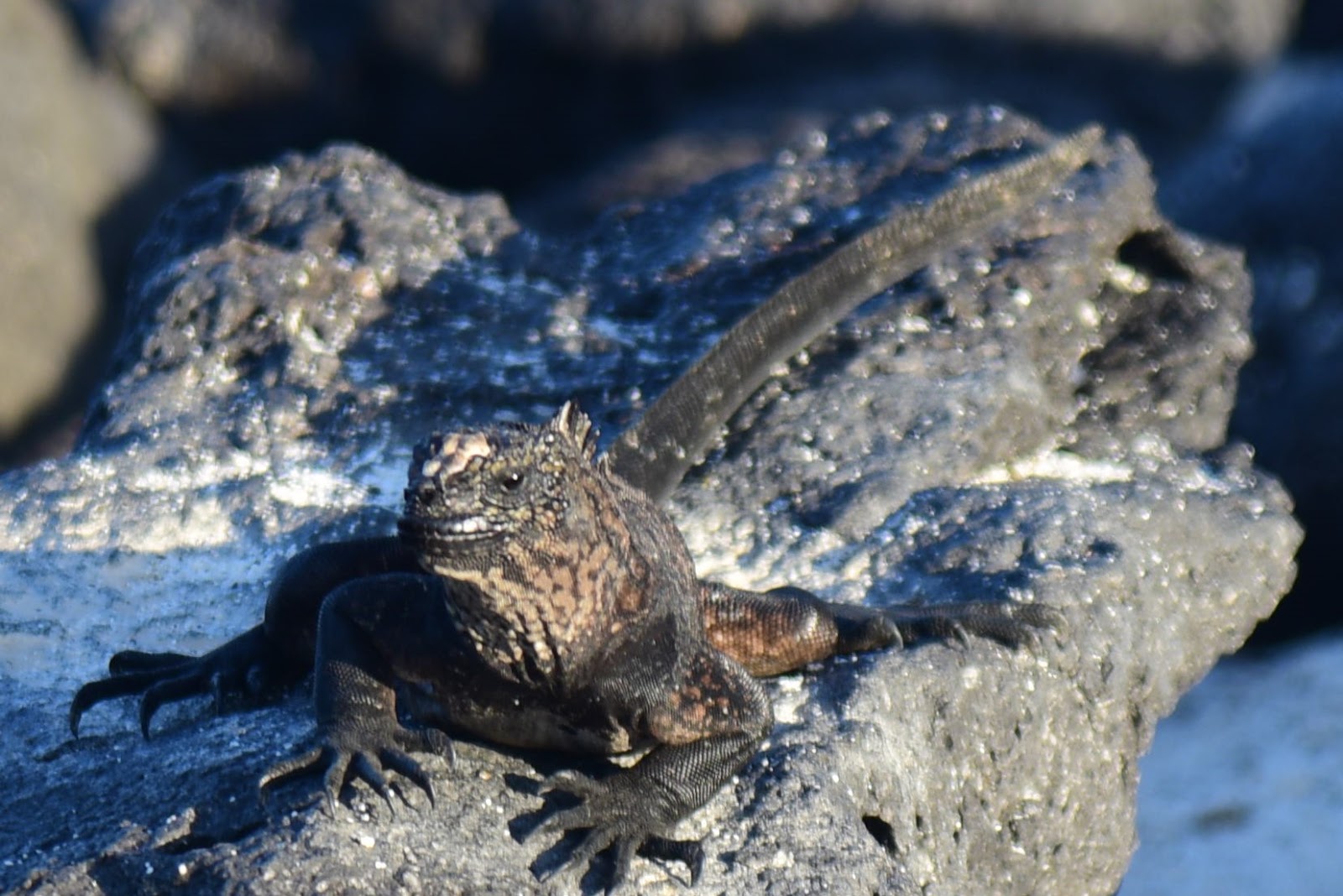
The islet is also home to hundreds of Sally lightfoot crabs, lava lizards and some marine iguanas. 
Sally Lightfoot crabs
Marine Iguana


Close up....

We mosied around in amongst them all quite happily even though there were many sea lion cubs still being weaned. They fed quite happily with us standing just a few feet away.

From there we went back in the panga’s and headed off to look at the cliffs of Baltra island where the male frigate birds are trying to attract a female mate by blowing a huge red balloon from their necks. It takes them about 25 minutes to fully inflate and then once they have attracted a mate it goes back down. Very photogenic although hard to capture from a rocking and rolling panga !


Also on parade was the famous Galapagos Blue Footed Booby, can't think where they got that name....


Back to the boat as the sun was setting for sundowners on deck in the warm balmy evening.


What a great start to our Galapagos adventure……

Saturday, 15 April 2017

Apr 14 - Destination Guayaquil

April 14  2017 - Destination Guayaquil

The wet coastal region of Equador..90% is for export
Late start today....8.45... We went down to the station and boarded the train again in Bucay and set out through the lush vegetation towards our next stop Naranjito. 


Millions of bananas ripening in the high humidity
This wet rainforest area is the main production area for sugar cane, bananas and pineapples and we passed through plantations of all three. 
The bananas are wrapped in bags with airholes once they reach a certain stage to help them ripen & colour and protect them from bird and insect damage. All the bags were printed from a local co-operative and all the small plantations work together to harvest and sell their products communally to the fair trade associations. Amongst the plantations, small homestead of indigenous Equadorians who all waved at the train with excitement as it passed by at its normal 30mph.

Pineapples - probably one of the few
fruits we found in every country
Pineapples are another major crop here and it is the first time we have seen field upon field of pineapples.


Cocoa Pods growing in the Hacianda plantation
Cocoa was the principle crop for this area and produced some of the highest quality cocoa until the 1940’s when a crop blight wiped out the entire area. After this the locals concentrated on bananas and pineapples but recently given the popularity of quality artisan chocolate some younger farmers have started again on the cocoa crop but one with better resistance to the bug that wiped out the native cocoa trees. The result again has been a high quality cocoa crop so the plantations are again on the increase.


We stopped at a Hacienda that is home to a Danish/Ecuadorian family who settled here 45 years ago and have plantations of all 3 crops but are now specialising in cocoa. 


They showed us the cocoa process from end to end. The cocoa pods are opened, the seeds are extracted (which in their original white state are sweet like passion fruit), then dried in the sun. 


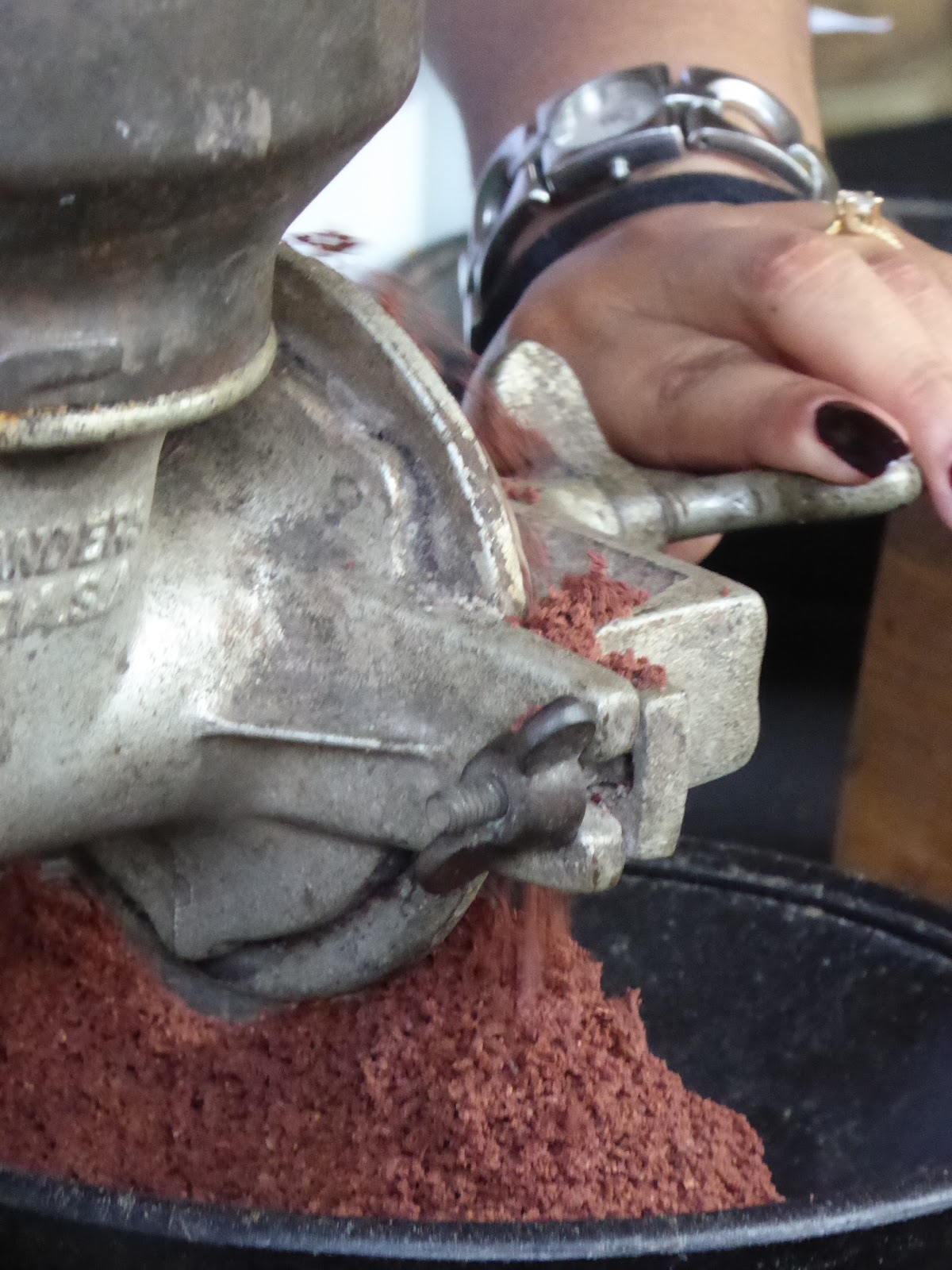
Once dry they are toasted in large pans and once cool the shell is removed to give the raw cocoa seed. These are then ground and bagged and shipped off for production. The raw cocoa tastes like chocolate but is very bitter, this is 100% cocoa powder.

We had lunch at the pretty Hacienda in the open which was lovely and then headed back to the train for our final leg into Guayaquil (Duran station).


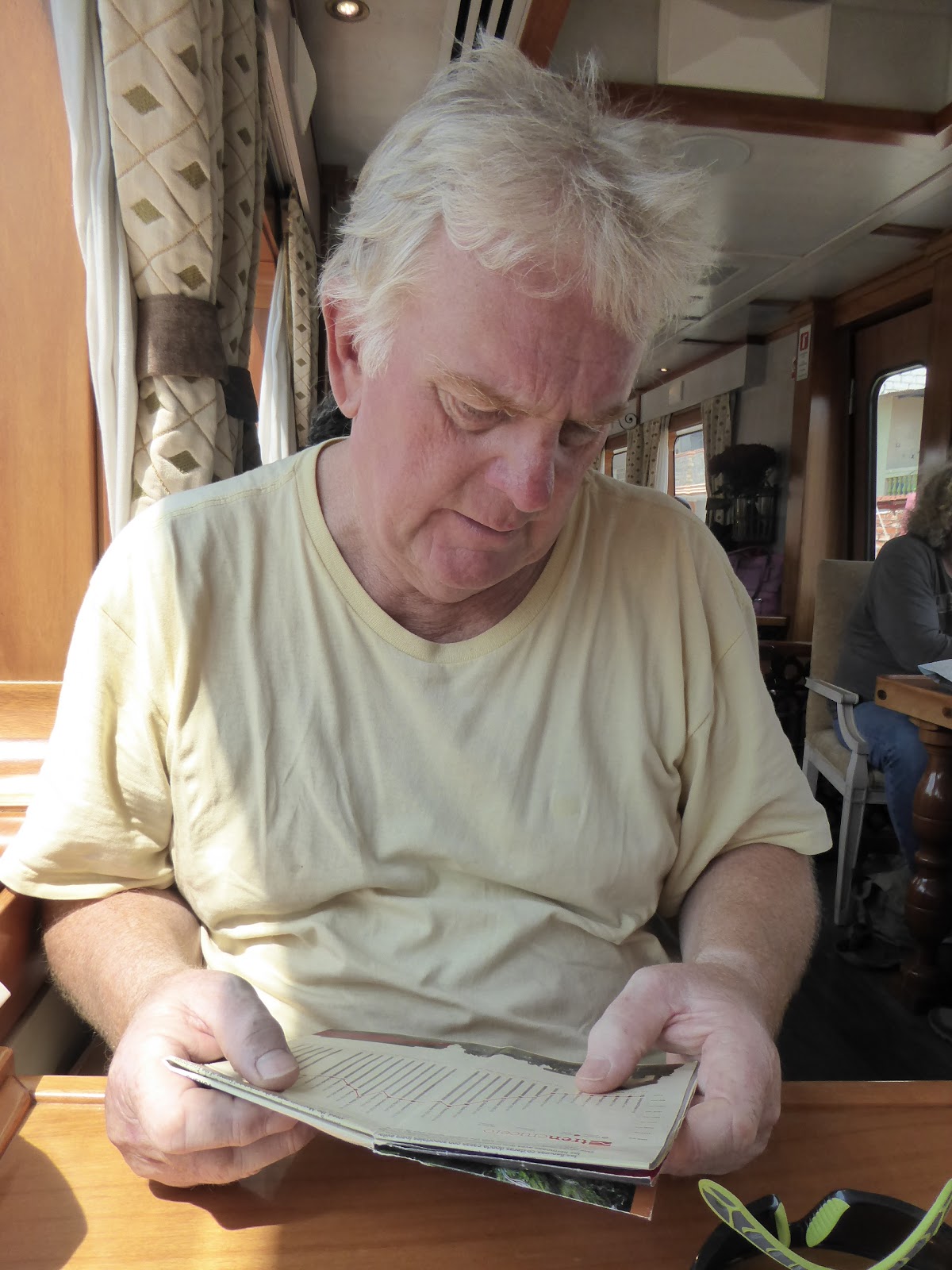
Steve spent much of the day consulting his altitude map of the journey to check that he really was nearing sea level and had said goodbye to the dreaded altitude sickness that has dogged him for the past 3 weeks.


Our final leg was again by steam train, so we watched as they switched the diesel over and attached the steam engine and then we were off puffing & tooting through the countryside. 


All the locals came out to wave and take photos as the steam train passed.


All went well until at a level crossing in a small town, the train caught the  overhead electrical wires !!  Wiring in South America is several degrees worse then Turkey and power  outages due to rainstorms are common. Not sure whose power we took out, but the train drivers had to tie up the cables so the train could go underneath !!


The city of Guayaquil although we will
spend no time her as we are just here to board a ship
We left the train in Duran station and picked up our ride into Guayquil city for a quick overnight before heading off to the Galapagos tomorrow.


HAPPY EASTER TO EVERYBODY.....

These are easter gifts although we thought they were a
bit ku Klux Klan for our tastes
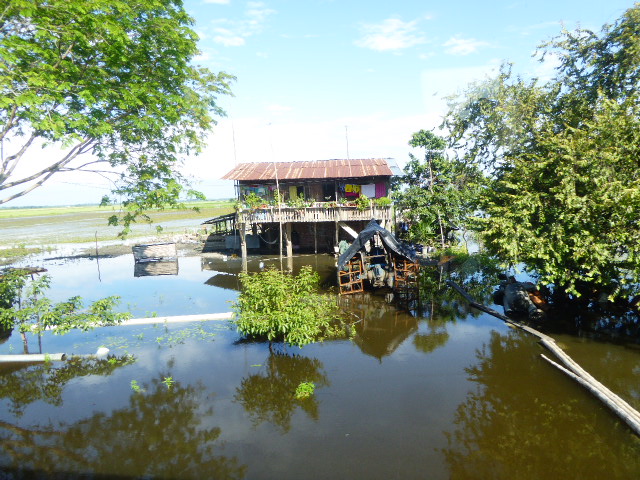
More views from the train of the wet coatal areas and the stilted communities.....outside the city, rice is the predominant crop.....


Friday, 14 April 2017

Apr 13 - The Devil's Nose !

Apr 13 – The Devil’s Nose !!

Another early start today 6.30 again !!! Enough already…

Down to Rio Bamba station to board the train for today’s journey through to Bucay. This first section of today’s journey was on a beautiful old steam train and the locals were as keen to take photos as we were !


The trip through the countryside with the steam train puffing & tooting at every crossing was lovely.


We stayed on board to watch the switch from steam to diesel again at Colta and then headed on to our next stop at Guamote.


We were really lucky here as not only was the traditional market in full swing, but as it is Good Friday tomorrow, the indigenous people from the villages were all in town buying the things they need to make the traditional soup called Fanesca they have on Good Friday.
Market right beside & usually on the train tracks

This little piggy went to market...

Local colour everywhere


Market day gossip !


It was a riot of colour, noise, smells and a lot of fun !!


From there it was on to the Devil’s Nose where the zig zag track descends 600m in hairpin bends as we move from the Altiplano to the cloud forest region of Ecuador. Very dramatic scenery.

We descended from the clouds at the top round the hairpin bends you can see on the hill

Then through the Cloud Forest which was very beautiful and lived up to its name by being 
very wet and humid. There were lots of beautiful butterflies and wild orchids in this very
green rainforest area. The whole area is incredibly fertile with black soil rich in minerals and 
every available inch is farmed as a small holding giving the whole area a patchwork effect.


Manual logging....


The track continued on its downwards track, taking us overall from a height of 3000m down to just 294m at our final stop Bucay. Steve is celebrating the end of the high altitude leg of the trip and hoping for a return to eating and drinking shortly……………this could put the trip budget up a bit as he intends to make up for lost time !!


Our final stop for today was for our little hotel in the cloud forest, which was a simple little hostelria set among the trees. Dinner outside in the warm with the birds and the forest sounds as backdrop…..lovely !

---------------------------------------------------------------------------------------------------------------------
The Best of the Rest - we had hundreds of market pics....


Sheep tied up on the track